Understanding Hydration Density
Understanding Hydration Density
Healthy hair behavior is not determined by styling technique alone. It is determined by the internal condition of the strand before styling begins. One of the most important structural conditions influencing hair behavior is hydration density.
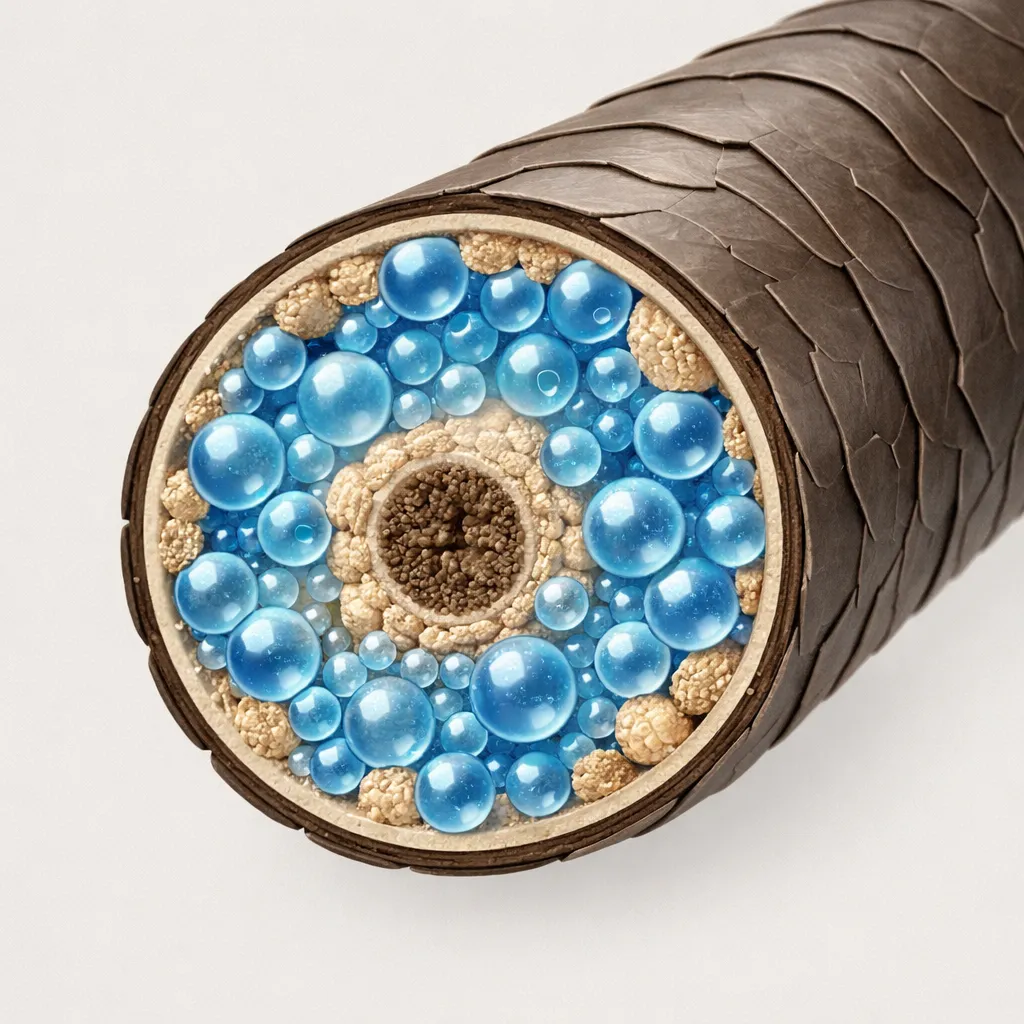
Hydration density describes the concentration of water molecules within the cortex of the hair strand. The cortex is the internal structural layer responsible for elasticity, strength, and flexibility. When the cortex contains a balanced concentration of water, the strand maintains its ability to stretch, recover, and respond predictably to tension and heat.
When hydration density is low, internal spaces within the cortex remain unfilled. These microscopic voids create instability in the strand’s structure. As a result, the hair becomes more vulnerable to environmental moisture, mechanical stress, and irregular behavior during styling.
The observable outcomes of low hydration density are often misunderstood. Frizz, reversion, and lack of movement are frequently blamed on humidity or external conditions. In reality, these behaviors are often the hair’s attempt to restore internal balance.
When internal hydration is insufficient, the strand begins what can be described as an atmospheric search—a process in which the hair pulls moisture from the surrounding environment in an attempt to compensate for internal deficiency. This is why hair with low hydration density often expands, frizzes, or loses its shape when exposed to humidity.
Hydration density should not be confused with surface moisture. Oils, serums, and heavy coatings may temporarily smooth the surface of the hair, but they do not increase the internal concentration of water within the cortex. True hydration density must be restored through structured preparation that allows water and conditioning agents to penetrate the internal structure of the strand.
When hydration density is properly established, the strand becomes heavier, more flexible, and more stable. Elasticity improves. The cuticle layers settle into a more compact arrangement. The hair becomes less dependent on external humidity for balance.
The result is not simply smoother hair. The result is predictable behavior.
Hair with balanced hydration density maintains its form more consistently, whether worn in its natural texture or styled with thermal tools. This is why preparation becomes more important than the finish itself.
Within the Hydration Density Method™, the goal of preparation is to restore internal balance before styling begins. By increasing hydration density within the cortex, the strand no longer needs to search for moisture in the environment. Instead, it retains its internal equilibrium.
When the internal structure is balanced, styling becomes a byproduct rather than the primary intervention.
Preparation shapes behavior. Healthy hair behaves differently.